Leverage, margin and stop-out: read the numbers before trading
A hypothetical example separates required margin from the amount you could lose.
Margin is not a loss budget
Leverage allows exposure larger than the margin committed to a position. A low margin requirement does not make the same position less sensitive to a price change. ASIC explains that leverage magnifies exposure and market sensitivity. Start with position size and the effect of a price move, rather than the maximum leverage advertised.
ASIC — Read this before trading CFDs
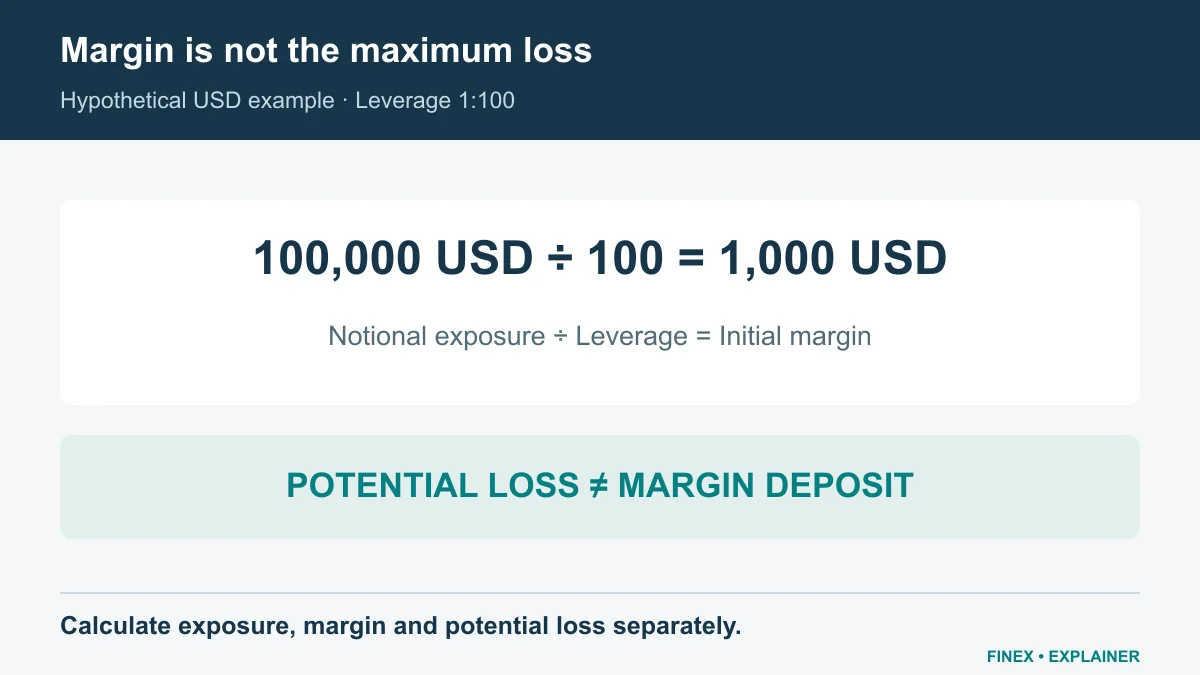
Diagram explained
Calculate exposure, margin and potential loss separately.
- Simplified example: USD 100,000 notional exposure ÷ 100 = USD 1,000 initial margin. Actual requirements vary by instrument and account.
- Margin is collateral. It does not mean that only USD 1,000 can be lost; losses depend on price changes and the size of the position.
- Check margin level, stop-out thresholds, gaps and applicable negative-balance protection. Stop-out is not a guaranteed exit price.
A hypothetical example
Assume a simple position with USD 10,000 of exposure. At 1:100 leverage the illustrative initial margin is USD 100; at 1:20 it is USD 500. A 1% adverse move in that exposure is about USD 100 before fees and currency effects in either case. These simplified numbers are not a provider quotation or a recommendation to take that position.
Do not confuse a margin warning with a planned exit. A stop-out is governed by the account rules and may involve automatic position closure. The applicable threshold, calculation and order of closure must be checked in the provider’s documentation. Fast markets and price gaps can make actual exits differ from a planned price.
Questions to resolve first
Ask which positions share margin, whether leverage changes around events, how equity is calculated, and what happens to open positions when funds are withdrawn. Record the answers for the actual entity and account. If you cannot reproduce the calculation on paper, more leverage is not a substitute for understanding it.
Sources and scope
Sources are provider publications. Conditions may vary by entity, country, account and program. Recheck before signing up.