Atmos drawdown: static and trailing equity limits
Distinguish Atmos's static floor from its trailing equity model, using a hypothetical calculation while leaving programme percentages and locking conditions account-specific.
Identify the floor type
The current rules page says static drawdown remains based on initial balance, while trailing drawdown rises with the highest equity. Neither label alone supplies the applicable percentage.
Sources for this section
atmosfunded.com — official documentation atmosfunded.com — official documentation atmosfunded.com — official documentation atmosfunded.com — official documentation
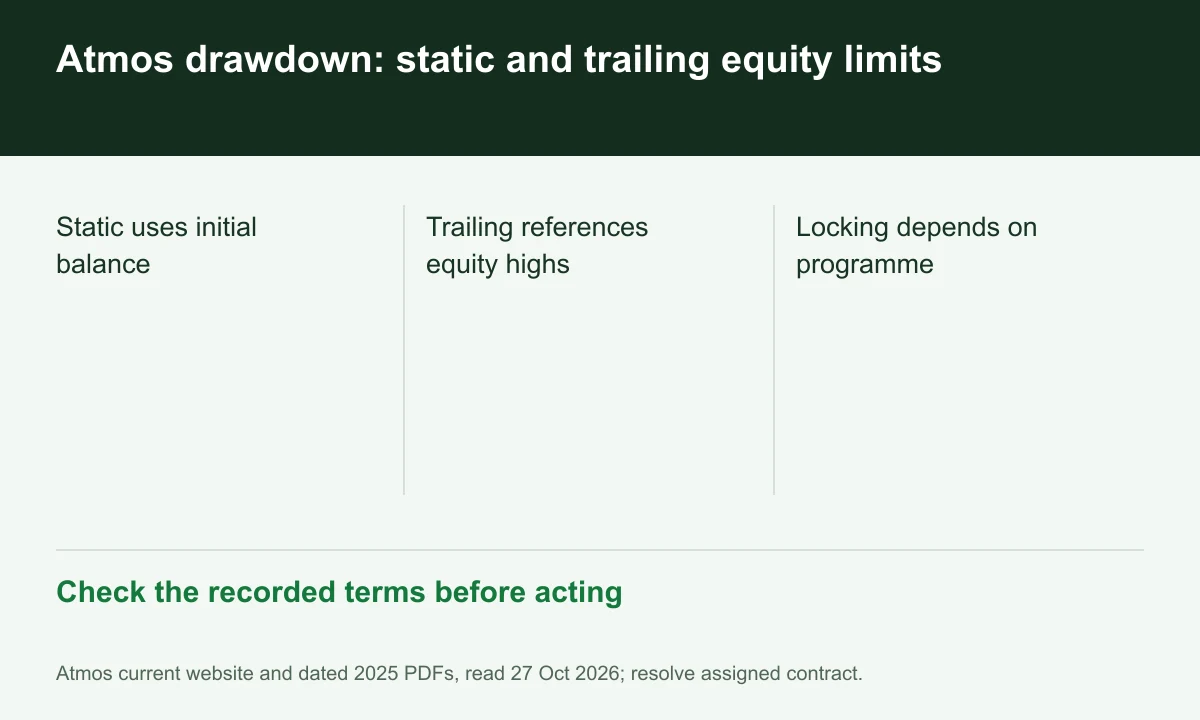
Diagram explained
Check the recorded terms before acting
- Static uses initial balance
- Trailing references equity highs
- Locking depends on programme
Keep equity separate from closed balance
An equity-based high can include floating gains. Record the highest relevant equity and current equity, not only a closed-trade statement, when reviewing the described trailing mechanism.
Use a labelled illustration
Assume an initial virtual USD 50,000 account and a hypothetical fixed USD 4,000 allowance. A static floor is USD 46,000; a trailing design can move upward with its defined high.
Do not assume one locking event
Atmos says some trailing accounts lock at initial balance after a milestone such as payout. The milestone and reset details vary, so the hypothetical allowance is not a product quote.
Your next step
Sources and scope
Sources are provider publications. Conditions may vary by entity, country, account and program. Recheck before signing up.