Upbit Korea KYC: residency and KRW access are separate
Understand Upbit Korea's residency, identity and real-name banking checks before comparing KRW access with BTC or USDT markets and transfer routes.
Start with Korean-account eligibility
Upbit Korea restricts non-residents and describes local identity-document requirements. A Vietnam-resident reader should not infer eligibility from this article. Korean rules are not a summary of Upbit Singapore or Indonesia.
Sources for this section
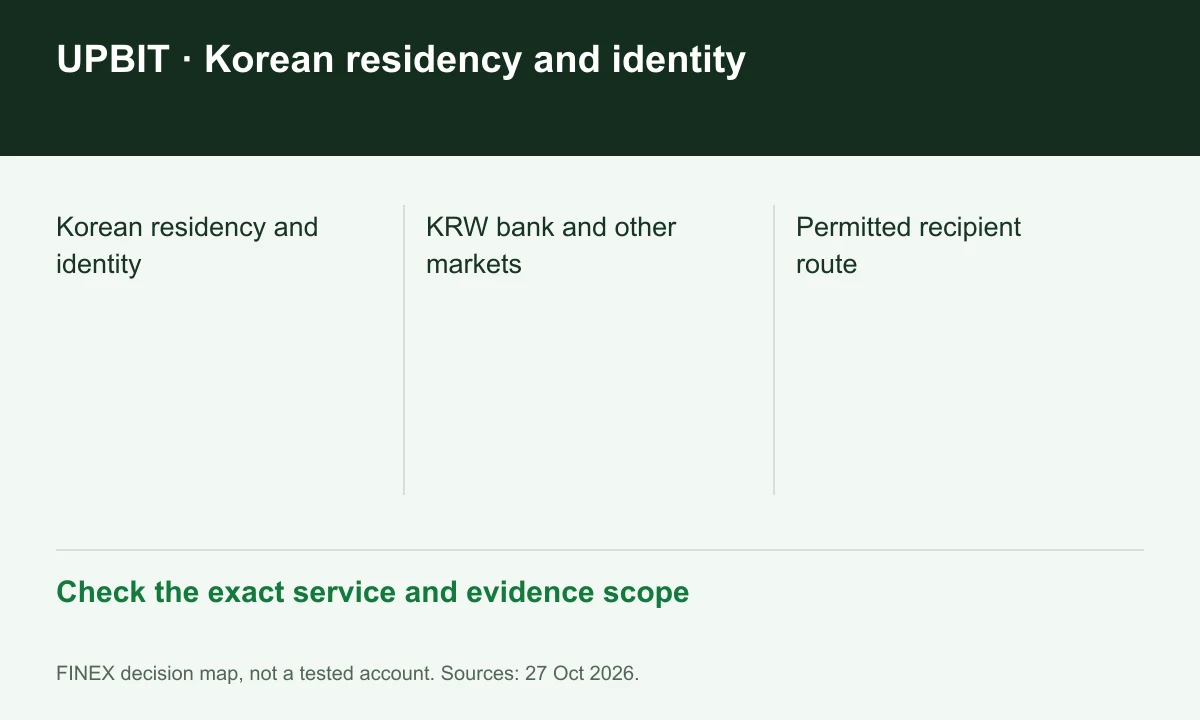
Diagram explained
Check the exact service and evidence scope
- Korean residency and identity
- KRW bank and other markets
- Permitted recipient route
Completed KYC is not KRW permission
The Korean policy distinguishes customer verification from a linked real-name bank account for KRW services. BTC and USDT access is described separately. Confirm the permitted market rather than assuming all verified users share funding options.
Sources for this section
Trading access and exit routes differ
Withdrawal guidance distinguishes permitted recipient routes and ownership checks. Buying an asset does not establish that every exchange or wallet may receive it. Check destination category and network before planning a later transfer.
Sources for this section
Keep domestic and global transfers apart
Korea's direct-transfer help describes a domestic account-to-account service and excludes the global Singapore/Indonesia route. Shared branding does not make those systems interchangeable. Record the sending account's region beside the intended transfer method.
Sources for this section
Register for up to 100% trading fee rebates
Rebate details
Contact FINEX to confirm the rebate rate, eligible fees and account conditions before registering. contact@finexbroker.com
Your next step
Sources and scope
Sources are provider publications. Conditions may vary by entity, country, account and program. Recheck before signing up.